Brown patches do not all have the same cause, and a laser that helps one pigment problem can aggravate another. By the end, you will know which concerns are plausible candidates, what a dermatologist checks before treatment, what the sessions involve, and how to judge whether the result is real and safe.
Key takeaways
- Laser toning suits diagnosed superficial brown epidermal pigment best.
- A dermatologist must distinguish melasma, dermal pigment, and non-pigmentary dullness first.
- Protect your skin from ultraviolet light throughout the treatment course.
- Topical treatment or another procedure may be safer for deeper or unstable pigment.
Which pigmentation problems are suitable for laser toning?
Laser toning for pigmentation is most suitable when uneven tone comes from diagnosed brown melanin, especially superficial epidermal pigment. It is less predictable for deeper dermal pigment and is not a treatment for every dull-looking complexion.
| Concern | Typical appearance | Suitability for laser toning |
|---|---|---|
| Solar lentigines | Flat, sharply defined sun-induced brown patches | Often suitable after examination |
| Freckles | Small, light-to-medium brown spots that darken with sun | Often suitable, but can recur |
| Post-inflammatory hyperpigmentation | Brown marks after acne, burns, bites, or irritation | Sometimes suitable once inflammation has settled |
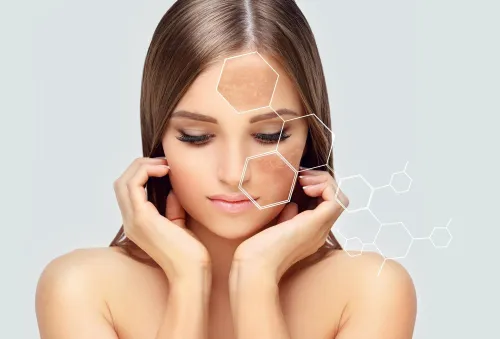
| Melasma | Symmetrical brown or grey-brown patches on the cheeks, forehead, or upper lip | Requires careful diagnosis; recurrence and rebound darkening are concerns |
| Redness or telangiectasia | Pink, red, or visible thread-like vessels | Not a melanin target; consider vascular treatment |
| Rough texture or acne scars | Depressions, raised scars, or uneven surface | Requires a texture-focused procedure, not pigment toning |
| Changing or irregular spot | New, asymmetric, bleeding, or variegated lesion | Examine first; do not laser before diagnosis |
Melasma and diffuse discoloration need particular caution because repeated low-fluence treatment can create pale mottling or worsen pigmentation. A clinician should identify whether the pigment is epidermal, dermal, or mixed before choosing treatment. If the color is unexplained, active, or changing, diagnosis comes before cosmetic lightening.
What does a dermatologist check before approving treatment?
Approval starts with identifying what is creating the uneven colour and whether laser can target it safely. A dermatologist examines the skin in normal light, uses dermoscopy for suspicious or irregular spots, and may use a Wood’s lamp to estimate whether pigment is mainly epidermal or deeper.
1. Confirm the diagnosis. Melasma diagnosis, post-inflammatory hyperpigmentation, freckles, sun spots, ochronosis, redness, and a changing nevus require different plans. A new, asymmetric, bleeding, or very irregular spot needs examination before laser because treatment can alter its appearance and delay skin-cancer diagnosis.
2. Assess pigment depth and pattern. Epidermal pigment often responds more predictably than dermal or mixed pigment. Diffuse, hormonally influenced melasma needs particular caution because aggressive treatment can trigger recurrence or further darkening.
3. Record your Fitzpatrick skin type and history of colour change after injuries. Darker skin types face higher risks of post-inflammatory hyperpigmentation, hypopigmentation, and prolonged colour change, so conservative settings and test spots matter.
4. Review medication use, including photosensitising medicines, retinoids, and recent pigment treatments. Tell the dermatologist about every prescription, supplement, peel, and resurfacing procedure.
5. Check timing and skin condition. Recent tanning or strong UV exposure, sunburn, dermatitis, infection, open wounds, or poor wound healing argues for postponement until the barrier recovers.
At Welcome to Advanced Skin & Hair Laser, these findings should determine the test-spot plan, fluence, treatment interval, and whether laser is appropriate at all. Immediate brightness is not proof of success; reassess after redness, swelling, and superficial shedding settle.
Related service
Laser Toning/Photo Facial Laser toning, also known as photo facial, is a non-invasive laser treatment that helps improve skin tone, texture, and overall radiance. View service → |
What happens during a laser toning session?
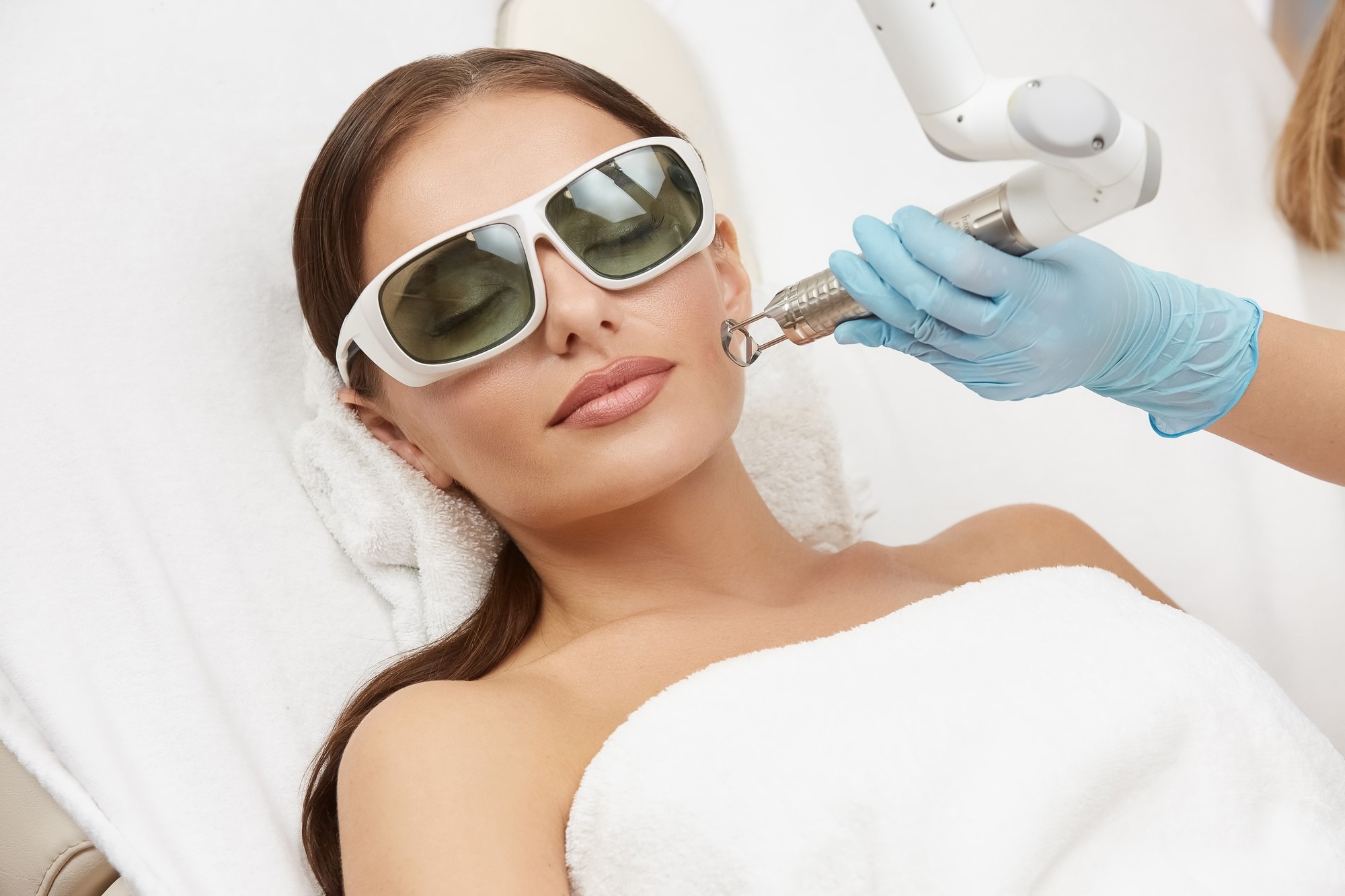
Your skin is cleansed and dried to remove makeup, sunscreen, oil, and debris. The clinician checks the area again, marks boundaries if needed, and provides wavelength-matched eye protection. Both you and staff must wear it because a 1,064-nm Nd:YAG laser can seriously injure the eyes.
The clinician may begin with test spots, particularly when you have darker skin or a history of pigment changes. These small pulses show how your skin responds before treatment continues and help guide a conservative setting.
During the laser passes, you may feel brief snapping, prickling, or warmth across the skin. The procedure usually does not involve bleeding, but discomfort varies with the area, fluence, pulse settings, and number of passes.
The treated skin can look pink or slightly swollen immediately afterward. Cooling with a fan or cool compress reduces heat and discomfort; ice placed directly on the skin can injure it.
Before you leave, you receive aftercare instructions, usually including gentle cleansing, moisturiser, strict broad-spectrum sunscreen, and avoiding heat, scrubbing, and active products until the skin settles.
How many sessions are needed, and when will you see the result?
Most people need a course of laser toning sessions rather than one visit. Clinics often schedule treatments at a 1–4 week treatment interval, giving the skin time to settle before the next session.
The number of sessions depends on the diagnosis, skin type, pigment depth, and laser settings. A review visit helps the clinician compare photographs, check whether the pigment is fading evenly, and decide whether to repeat, modify, delay, or stop treatment.
Do not treat a fixed package of sessions as a guarantee; deeper or mixed pigment can respond slowly and unevenly.
Early changes are not the final result. Post-treatment redness or mild swelling can temporarily make the skin look darker or brighter, while pigment shedding can make brown marks appear lighter at the surface. Reduced contrast between pigmented and untreated skin can also create an immediate “glow” that fades as the skin returns to normal.
Wait until inflammation has settled before judging the outcome. Your clinician may assess progress several weeks into the course and again after the last session, because pigment can continue changing after treatment. If the skin becomes persistently darker, patchier, painful, or irritated, pause further sessions and request a review rather than increasing treatment intensity.
When are topical treatment, protection, or another procedure a better choice?
Laser is not automatically better than pigment-control medication for melasma. Hydroquinone, azelaic acid, retinoids, cysteamine, tranexamic acid, or a prescribed combination can control pigment with less risk of heat injury; laser is often an adjunct or second-line option because melasma recurrence remains common.
Daily broad-spectrum sunscreen is part of treatment, not optional aftercare. Choose a tinted sunscreen with iron oxides to reduce visible-light exposure, which can worsen melasma in darker skin types, and keep using it during maintenance even after the colour improves.
Darker Fitzpatrick skin types need a conservative plan because laser injury can trigger post-inflammatory hyperpigmentation, prolonged darkening, or lightening. Repeated low-fluence treatment can also create mottled hypopigmentation, sharply pale macules, rebound hyperpigmentation, or paradoxical melasma worsening.
1. Treat the cause before choosing a procedure. Active dermatitis, sunburn, infection, open wounds, recent tanning, or a strong peel or resurfacing treatment increase inflammation and pigment risk. Wait until the barrier has recovered.
2. Ask whether a topical regimen or a gentler procedure, such as a carefully selected chemical peel, offers a safer first step. Use laser only with test spots, conservative fluence, strict photoprotection, and planned review visits.
3. Do not laser a new, changing, asymmetric, bleeding, or very irregular spot before examination. Partial removal can obscure melanoma or another skin cancer and delay diagnosis.
Frequently asked questions
Which pigmentation problems are suitable for laser toning?
Laser toning is most suitable for diagnosed superficial brown melanin in the epidermis. Deeper dermal pigment and conditions such as unstable melasma require a more cautious assessment.
What does a dermatologist check before approving laser toning?
The dermatologist checks the diagnosis, pigment depth, skin type, history of melasma or post-inflammatory pigmentation, current medicines, recent sun exposure, and the risk of post-treatment darkening.
What happens during a laser toning session?
The skin is examined and cleansed, protective eyewear is provided, and the laser is passed over the target area using settings selected for your skin and pigmentation. Temporary warmth, redness, or mild swelling can occur.
How many laser toning sessions are needed, and when will results appear?
The number of sessions depends on the diagnosis, pigment depth, skin response, and treatment settings. Improvement is assessed across the course rather than judged immediately after one session.
When is topical treatment, protection, or another procedure better?
Topical treatment and strict sun protection are often preferred for active or hormonally influenced pigmentation. Another procedure may be better when pigment is deeper, the diagnosis is uncertain, or laser toning carries a high risk of worsening discoloration.