Dry, itchy, cracked and inflamed skin can follow eczema’s recurring pattern, but psoriasis, fungal infection, scabies and contact dermatitis can look similar. By the end, you will know how to recognise the pattern, protect the skin barrier each day, use anti-inflammatory treatment safely and identify when repeated flares need a clinical review.
Key takeaways
- Moisturize within three minutes of bathing to reduce water loss.
- Use fragrance-free creams or ointments instead of thin lotions on very dry skin.
- Track foods, products and environments linked to recurring flares.
- Seek specialist care for infected, widespread or treatment-resistant eczema.
How to tell eczema from other itchy rashes
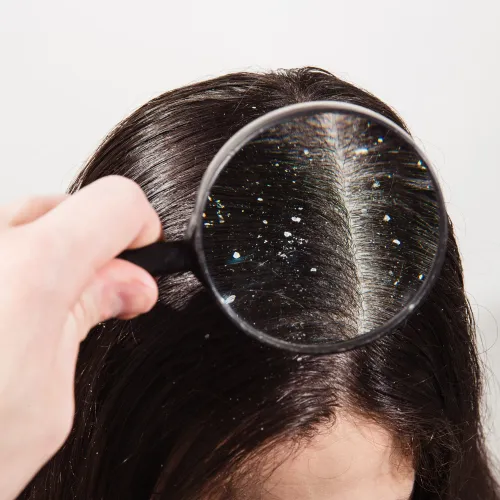
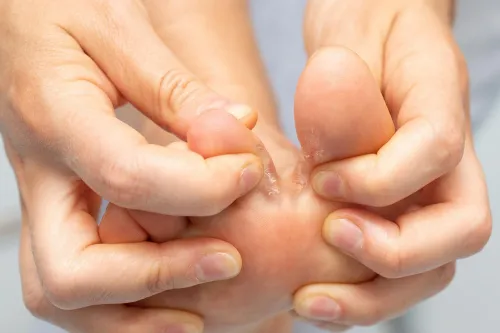
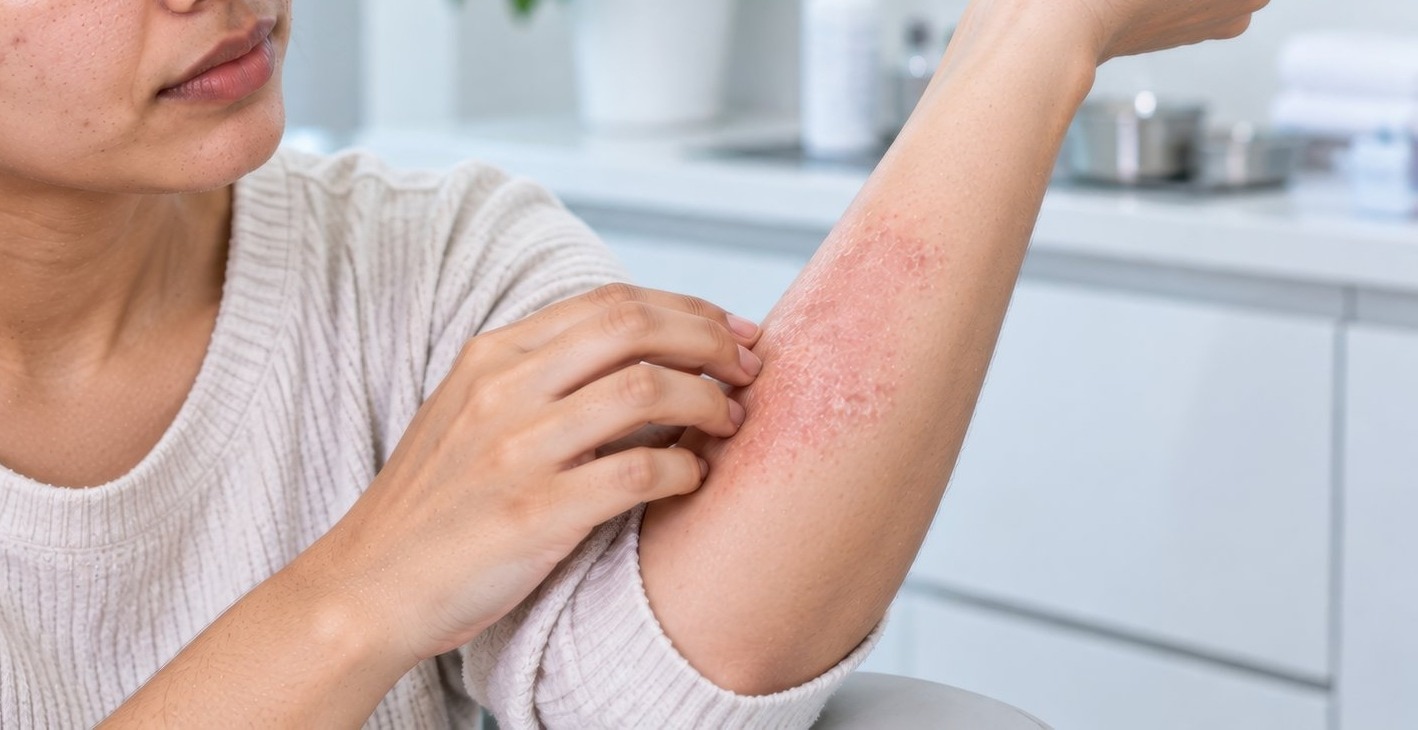
Eczema usually appears as dry, itchy, inflamed skin that becomes rough, scaly, cracked or thickened after repeated scratching. Atopic dermatitis, the commonest form, often affects babies’ cheeks and scalp, children’s elbow and knee creases, and adults’ hands, eyelids, face, neck and skin folds.
Use this three-step check before treating every itchy patch as eczema:
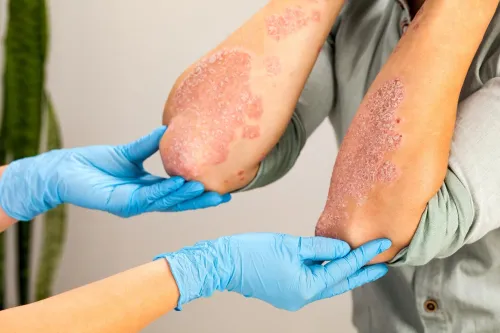
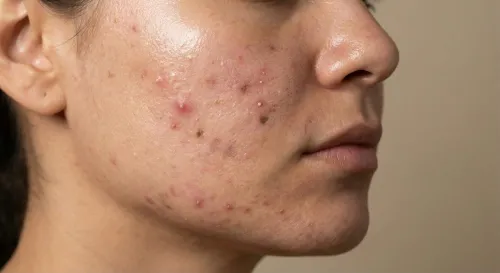
- Check the shape and surface. Eczema is often uneven and poorly defined. Psoriasis forms sharply bordered, thicker plaques with silvery scale, commonly on elbows, knees or the scalp. A fungal infection often makes an expanding ring with a clearer centre, while acne produces blackheads, whiteheads or pus-filled spots around hair follicles.
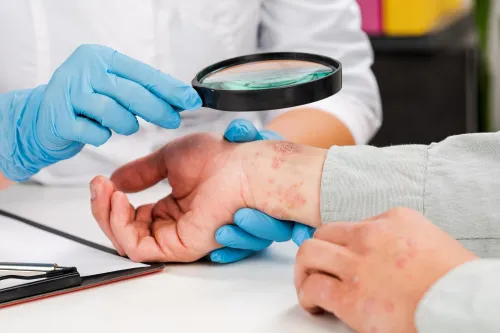
- Check how long each mark lasts. Hives are raised welts that move or fade within 24 hours. Scabies causes severe night-time itching, tiny bumps or burrows between fingers, at the wrists, waist or genitals, and often affects household contacts. Contact dermatitis stays where a fragrance, soap, metal or detergent touched the skin.
- Check for danger signs. Seek prompt medical assessment for rapidly spreading redness, warmth, pain, pus, fever, facial swelling or breathing trouble. A new, one-sided, asymmetric or treatment-resistant rash needs reassessment rather than repeated self-treatment.
A recurring pattern supports eczema, but it does not prove it. Record products, heat, sweat, wool, stress and flare timing in your inflamed skin management plan; broad food elimination diets and allergy panels are not routine tests without immediate reactions such as hives, vomiting, wheeze or swelling.
The daily routine that reduces dryness and water loss
A short lukewarm bath or shower does not worsen eczema; hot water, scrubbing and long soaking strip more oil from the skin. Keep bathing brief, pat dry without rubbing, and apply moisturiser immediately while the skin is still slightly damp.
Use this eczema skin care routine:
- Wash with a fragrance-free cleanser only on sweaty, dirty or soiled areas. Plain water is enough for less-soiled skin.
- Avoid fragranced soap, bubble bath, essential oils, exfoliating gloves and rough flannels.
- Apply an emollient moisturiser after every bath or shower and at least once more during the day, including when the skin looks clear.
- Reapply to dry or tight areas instead of waiting for itching to return.
Choose the texture you can use consistently. The best product is one that limits water loss without making daily care impractical.
| Formulation | Main advantage | Trade-off |
|---|---|---|
| Ointment | Strongest barrier against water loss | Greasy; less practical on hairy or large areas |
| Cream | Easier to spread and less greasy | Often needs more frequent application |
| Lotion | Light and quick to apply | Usually too weak for very dry, cracked skin |
During a flare, keep the same cleansing and moisturising routine. If moisturiser stings repeatedly, causes a new rash or leaves follicles inflamed, stop that product and ask a clinician or pharmacist for an alternative.
How creams, ointments and steroid treatments should be used
Choose a moisturiser by skin thickness and comfort, not by fragrance or marketing claims. Eczema treatment works best with a plain, fragrance-free emollient applied generously after washing and whenever skin feels dry.
| Ointment vs cream vs lotion | Best use | Trade-off |
|---|---|---|
| Ointment | Very dry, cracked skin; overnight use | Greasy and unsuitable for some hairy areas |
| Cream | Daily use on most affected areas | Less greasy but may sting cracked skin |
| Lotion | Mild dryness or large hairy areas | Evaporates quickly and needs frequent reapplication |
For topical medicine, use the fingertip unit: squeeze a strip from an adult fingertip to its first crease, about 0.5 g, enough for two adult palm-sized areas. Apply the prescribed topical corticosteroids in a thin, even layer to active inflamed skin, then moisturiser as directed.
Do not spread a tiny amount over a large flare; undertreating leaves inflammation active beneath fading redness.
Potency, body site, age and treatment length determine risk. Use low-potency corticosteroids on eyelids, face, folds and genital skin unless a clinician prescribes otherwise; thicker plaques on hands, feet or the trunk may need stronger treatment for a limited course.
Prolonged use of potent steroids on thin skin raises the risk of thinning, bruising and stretch marks.
Do not stop solely when redness improves if your prescription specifies a full course. Frequent relapses in the same spots may need proactive treatment once or twice weekly. Ask about tacrolimus or pimecrolimus for sensitive sites; initial warmth or burning is common.
Finding triggers and handling a recurring flare safely
A seven-day diary can reveal which eczema triggers precede each eczema flare-up. Record new skincare, laundry products, bathing temperature, sweat, heat, weather, clothing, stress, and the timing and location of symptoms. A rash that appears where one product touches the skin points toward contact dermatitis, especially after using fragranced products.
- Fragranced creams, soaps, shampoos and cosmetics
- Detergent, fabric softener and disinfectant residue
- Hot weather, sweating and tight synthetic clothing
- Wool or rough fabrics
- Cold, dry air and sudden weather changes
- Stress, poor sleep and repeated scratching
- New medicines, workplace chemicals or protective gloves
| Sign or pattern | What it may indicate | What to do |
|---|---|---|
| Dry, itchy redness without pus, marked pain or fever | Eczema inflammation | Continue the established moisturising and prescribed treatment plan |
| Honey-coloured crusts, weeping, pus-filled spots or rapidly worsening redness | Possible bacterial infection | Arrange clinical assessment instead of adding antibiotic cream yourself |
| Increasing warmth, swelling, tenderness, pain or fever | Spreading infection or systemic illness | Seek same-day medical advice |
| Rapidly painful, punched-out blisters or erosions with fever | Eczema herpeticum, a viral emergency | Seek urgent assessment today |
Do not keep self-treating a recurring rash that is asymmetric, rapidly worsening or failing to respond to appropriate treatment. A clinician can check for infection or another diagnosis; eczema can become colonised with bacteria without needing antibiotics, so crusting alone does not prove that antibiotics are required.
When recurring eczema needs specialist treatment
When moisturisers and prescribed topical treatment are not controlling eczema, arrange a dermatology review rather than repeatedly switching creams. The clinician should check the diagnosis, infection, treatment technique, steroid potency and whether frequent relapses need proactive treatment on the same sites once or twice weekly.
A steroid-sparing treatment such as tacrolimus or pimecrolimus can suit the eyelids, face, neck and folds, where repeated corticosteroid exposure is less desirable. Burning or warmth during the first few days is common; do not apply these medicines to infected skin without medical advice.
For moderate-to-severe or severe eczema that remains active, discuss these options:
- Narrowband UVB phototherapy involves repeated supervised sessions, dose increases based on your skin response and review of cumulative ultraviolet exposure. It is a medical treatment, not a cosmetic laser or intense-pulsed-light session.
- Systemic treatment includes biologic medicines or oral immunomodulators. Dupilumab can cause injection-site reactions, conjunctivitis and dry eye, so your clinician must weigh severity, other conditions, monitoring and individual risks.
- Cosmetic procedures should wait until eczema is no longer inflamed, cracked or infected. Exfoliation, peels and energy-based treatments over active eczema can worsen barrier damage.
Welcome to Advanced Skin & Hair Laser can help separate an active eczema flare from skin that is ready for an elective procedure, but tell the treating team about your eczema and every current medicine first.
Frequently asked questions
How can you tell eczema from other itchy rashes?
Eczema commonly causes dry, itchy, inflamed skin that becomes rough, scaly, cracked or thickened after scratching. The location and pattern help distinguish it from fungal infections, contact dermatitis, psoriasis and scabies, but a clinician should assess an uncertain rash.
What daily routine helps reduce eczema dryness and water loss?
Take short lukewarm baths or showers, use a gentle fragrance-free cleanser only where needed, pat rather than rub your skin dry, and apply a thick moisturizer within three minutes. Reapply after handwashing and whenever the skin feels dry.
How should eczema creams, ointments and steroid treatments be used?
Apply moisturizer generously and use prescribed topical steroids on active inflamed patches according to the clinician’s instructions. Do not apply steroid treatment to the eyes, face, skin folds or broken skin unless your clinician has told you to do so.
How can you find triggers and handle a recurring flare safely?
Record new soaps, cosmetics, fabrics, medicines, foods, heat, sweat and stress alongside flare dates. Stop suspected irritants, continue regular moisturizing, avoid scratching and seek medical advice if the rash spreads, becomes painful or develops yellow crusts or pus.
When does recurring eczema need specialist treatment?
Arrange specialist assessment when flares keep returning despite consistent skincare, disturb sleep, cover large areas, affect the eyelids or hands, become infected, or require frequent steroid courses. A dermatologist can confirm the diagnosis and consider patch testing or other treatments.