Recurring pimples need more than a product chosen by trial and error: the pattern, depth, location, and cause determine whether you need prevention, prescription care, or a different diagnosis altogether. By matching the breakout to the right treatment phase, you can build a routine, judge its progress, and know when professional assessment is necessary.
Key takeaways
- Identify blocked pores, inflamed acne, or acne-like conditions before treating breakouts.
- Start with one proven active ingredient and increase use only as your skin tolerates it.
- Seek medical care when acne is painful, scarring, widespread, or unchanged after consistent treatment.
- Treat active pimples, relapse prevention, and leftover marks as separate problems.
Identify the Breakout Before Choosing Pimples Treatment
A recurring breakout is not automatically acne. Identify whether you have blocked pores, inflamed lesions, or an acne-like condition before choosing pimples treatment.
| Pattern | What it suggests | Clue to check |
|---|---|---|
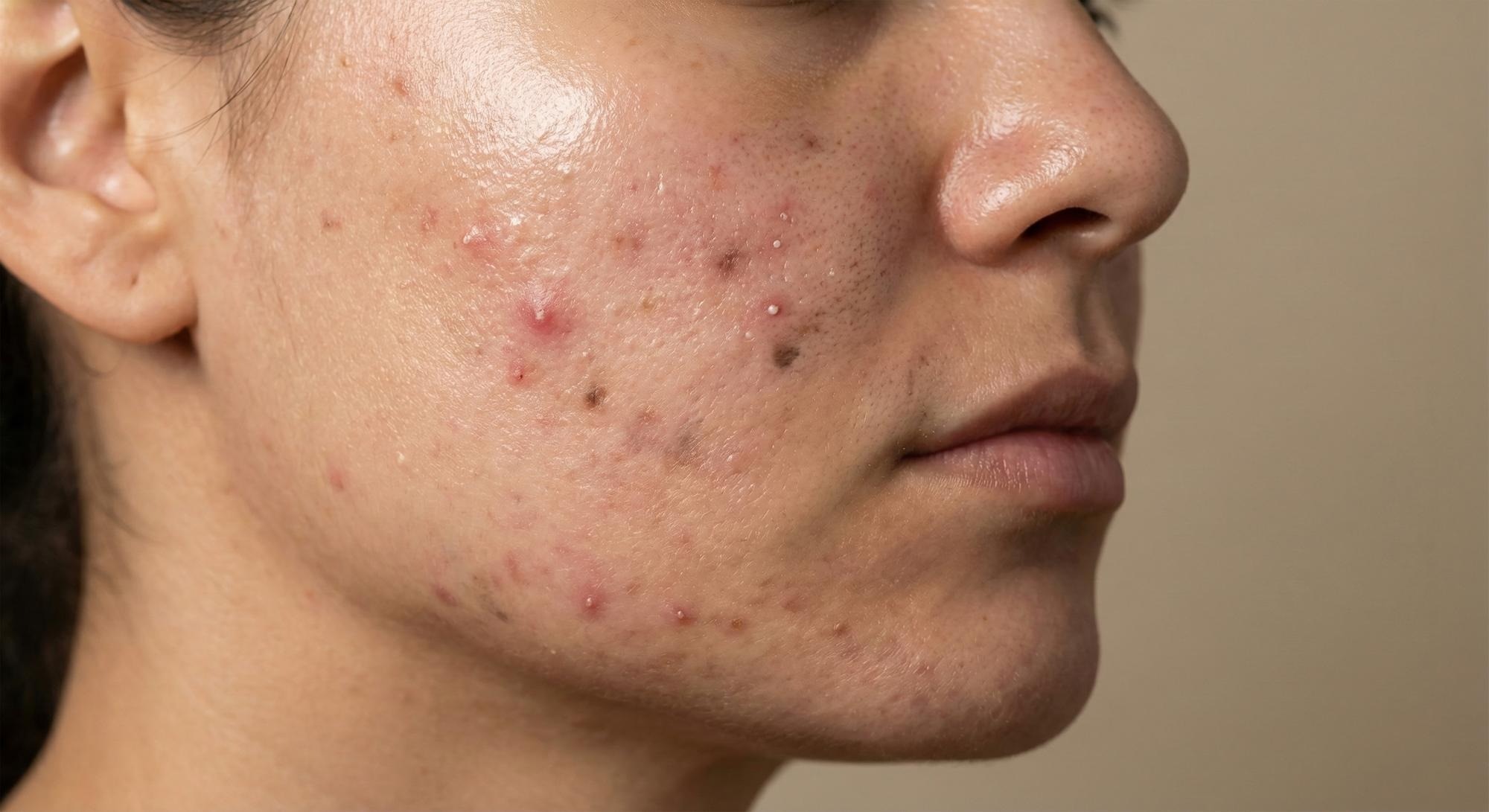
| Comedonal acne | Blackheads or whiteheads with little redness | Clogged pores dominate |
| Inflammatory papules | Red, tender raised bumps without fluid | Inflammation surrounds each lesion |
| Pustules | Pimples containing visible white or yellow fluid | Do not squeeze them |
| Nodules and cysts | Deep, painful, firm or fluctuant lumps | Scarring risk needs medical assessment |
| Acne caused by hormones | Flares around the jaw, chin, or menstrual cycle | Recurrence follows a hormonal pattern |
| Folliculitis | Many itchy, similar-sized bumps | Hair follicles, sweating, friction, or shaving are involved |
| Perioral dermatitis | Small bumps around the mouth, nose, or eyes | Burning or scaling accompanies the eruption |
| Rosacea | Central facial redness with bumps or visible vessels | Heat, alcohol, spicy food, or skincare can trigger flares |
| Ingrown hairs | Isolated bumps centred on recently removed hairs | A trapped or curved hair is visible |
| Medication-related eruption | Sudden acne-like spots after a new drug | Timing follows a medicine or dosage change |
An itchy, uniform eruption, a sudden rash around the mouth or eyes, or breakouts beginning after medication can worsen with repeated standard acne products. Arrange an examination before adding more actives; the correct treatment depends on the diagnosis, not the bump’s appearance alone.
Build a First-Line Routine Without Over-Irritating Your Skin
Start with one active, not four. Use it consistently for several weeks before adding another; stacking products quickly turns mild dryness into burning, peeling and abandoned treatment.
- Benzoyl peroxide 2.5% to 5%: apply a thin layer to acne-prone skin once daily or use a wash, then rinse thoroughly. It can bleach fabric and hair, so use white towels and clothing.
- Adapalene 0.1%: at night, spread a pea-sized amount over clean, completely dry skin across the affected area, not just visible pimples. More product or more frequent use will not clear acne faster.
- Salicylic acid 0.5% to 2%: start every other day if you have clogged pores or oily skin. Stop increasing it if stinging, tightness or persistent peeling develops.
- Azelaic acid 10% to 20%: begin once daily and increase only when your skin remains comfortable. It can suit acne with lingering dark marks.
Use a gentle cleanser, a non-comedogenic moisturiser and broad-spectrum sunscreen every morning. “Non-comedogenic” does not guarantee a perfect match, but moisturising helps you continue treatment without damaging your skin barrier. If irritation becomes painful, swollen or persistent, reduce frequency or stop and seek clinical advice.
Do not self-start adapalene if you are pregnant or trying to conceive. Ask a clinician about pregnancy-appropriate choices; azelaic acid and limited benzoyl peroxide are commonly considered after individual review.
Know When Over-the-Counter Care Is Not Enough
Seek dermatological supervision if acne continues after 8 to 12 weeks of consistent, correctly applied self-care, or if you have any of these warning signs:
- Deep, painful nodules or cysts
- Scars, enlarging dark marks, or lesions that threaten to scar
- Frequent relapses despite maintenance treatment
- Acne affecting your mood, sleep, or daily activities
- Pregnancy, plans to conceive, or breastfeeding
A clinician may prescribe topical tretinoin for clogged pores and relapse prevention. Topical clindamycin should never be used alone: pair it with benzoyl peroxide and use it for a limited course to reduce antibiotic resistance. Oral doxycycline also needs a defined course alongside topical treatment, not indefinite use by itself.
Adult women with persistent or hormonally patterned acne may discuss combined oral contraceptives or spironolactone. These are prescription treatments with contraindications, drug interactions, and pregnancy considerations, so do not treat them as stronger versions of an ordinary acne cream.
Isotretinoin is reserved for severe acne, scarring or imminent scarring, or acne that has not responded adequately to topical and oral treatment. It requires strict clinician supervision because of major pregnancy-related risks and other adverse effects.
A dermatologist can use an intralesional corticosteroid injection for a particularly painful nodule that needs rapid reduction. Do not inject or squeeze it yourself; both actions can worsen inflammation and scarring.
Separate Clearing Pimples From Preventing Relapse and Treating Marks
Judge an acne treatment timeline 6 to 8 weeks after starting consistently, not after a few days. Noticeable change often appears during that window, while 3 to 4 months acne improvement may be needed for the full effect.
An early retinoid flare can bring temporary dryness, peeling, or extra bumps; reduce frequency if irritation is strong rather than applying more product.
After active pimples settle, separate leftover marks from permanent texture:
- Post-inflammatory erythema is flat red or pink colour that gradually fades.
- Post-inflammatory hyperpigmentation is flat brown or grey-brown colour; daily broad-spectrum sunscreen helps stop it darkening.
- Acne scars include indented or raised texture changes and will not disappear by continuing an acne cream alone.
Do not stop every preventive product when your skin clears. Create an acne maintenance plan with a topical retinoid applied as a thin, pea-sized layer across the acne-prone area, rather than only on visible spots.
Keep using it at the frequency your skin tolerates, and avoid picking because each damaged pimple increases the risk of persistent marks and scars.
If frequent new lesions return after three to four months, painful nodules develop, or marks keep accumulating, arrange a review. Treating scars or pigment procedures before controlling active acne wastes effort and can trigger another breakout.
Compare Procedures With the Treatment Your Acne Actually Needs
Prioritise medical acne treatment when breakouts recur, involve papules, pustules, nodules or cysts, or leave new lesions each week. A topical retinoid, benzoyl peroxide, azelaic acid, or prescribed oral treatment addresses new acne; a procedure mainly changes what is already visible.
| Option | What it adds | When it applies |
|---|---|---|
| Chemical peels | Temporary pore clearing and surface renewal | Selected comedonal acne or marks, after assessing irritation risk |
| Comedone extraction | Removes accessible blackheads and whiteheads | A trained professional treats a limited number of non-inflamed comedones |
| Visible light | May reduce inflammatory acne activity | Selected mild-to-moderate cases after discussing variable evidence |
| Laser or intense pulsed light | May reduce inflammation or redness with device-specific effects | Carefully selected patients willing to attend multiple acne treatment sessions |
| Radiofrequency | More commonly targets texture and acne scars than active acne | Indented scars after acne is controlled, not as a substitute for acne treatment |
Do not use chemical peels or comedone extraction to force improvement from deep, painful acne. Squeezing, aggressive exfoliation, or combining procedures with several acids and retinoids can damage the barrier, prolong redness, and cause pigment changes.
Welcome to Advanced Skin & Hair Laser can help compare a procedure with medical acne treatment by assessing lesion type, skin tone, current products, and scarring risk before recommending a device or peel. Ask what it will treat, how many sessions are expected, and what happens if new acne continues.
Frequently asked questions
How can you identify the right pimples treatment?
First distinguish blocked pores, inflamed lesions, and acne-like conditions, because each problem needs a different approach.
What is a low-irritation first-line routine for recurring acne?
Use gentle cleansing, non-comedogenic moisturiser and sunscreen, then introduce one acne active gradually instead of layering several irritants.
When is over-the-counter acne care not enough?
Seek medical assessment for painful or widespread acne, scarring, persistent breakouts, or acne that does not improve with consistent care.
Do acne procedures replace a treatment routine?
Procedures can address selected concerns, but they do not replace a plan for clearing acne and preventing new breakouts.