Persistent itching does not prove that a rash is fungal, and repeated use of the wrong cream can hide the real diagnosis or prolong infection. You will learn how to recognise common fungal patterns, confirm the cause, use treatment correctly, identify reasons for recurrence, and know when oral medication or prompt medical assessment is necessary.
Key takeaways
- A raised scaly ring with a clearer centre points toward ringworm.
- Apply antifungal cream beyond the visible rash and complete the stated course.
- Request oral treatment assessment when infections are extensive, recurrent, or treatment-resistant.
- Seek diagnosis before using steroid creams on an unexplained itchy rash.
Which recurring rashes are actually fungal infections?
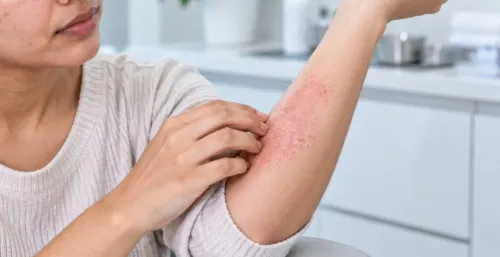
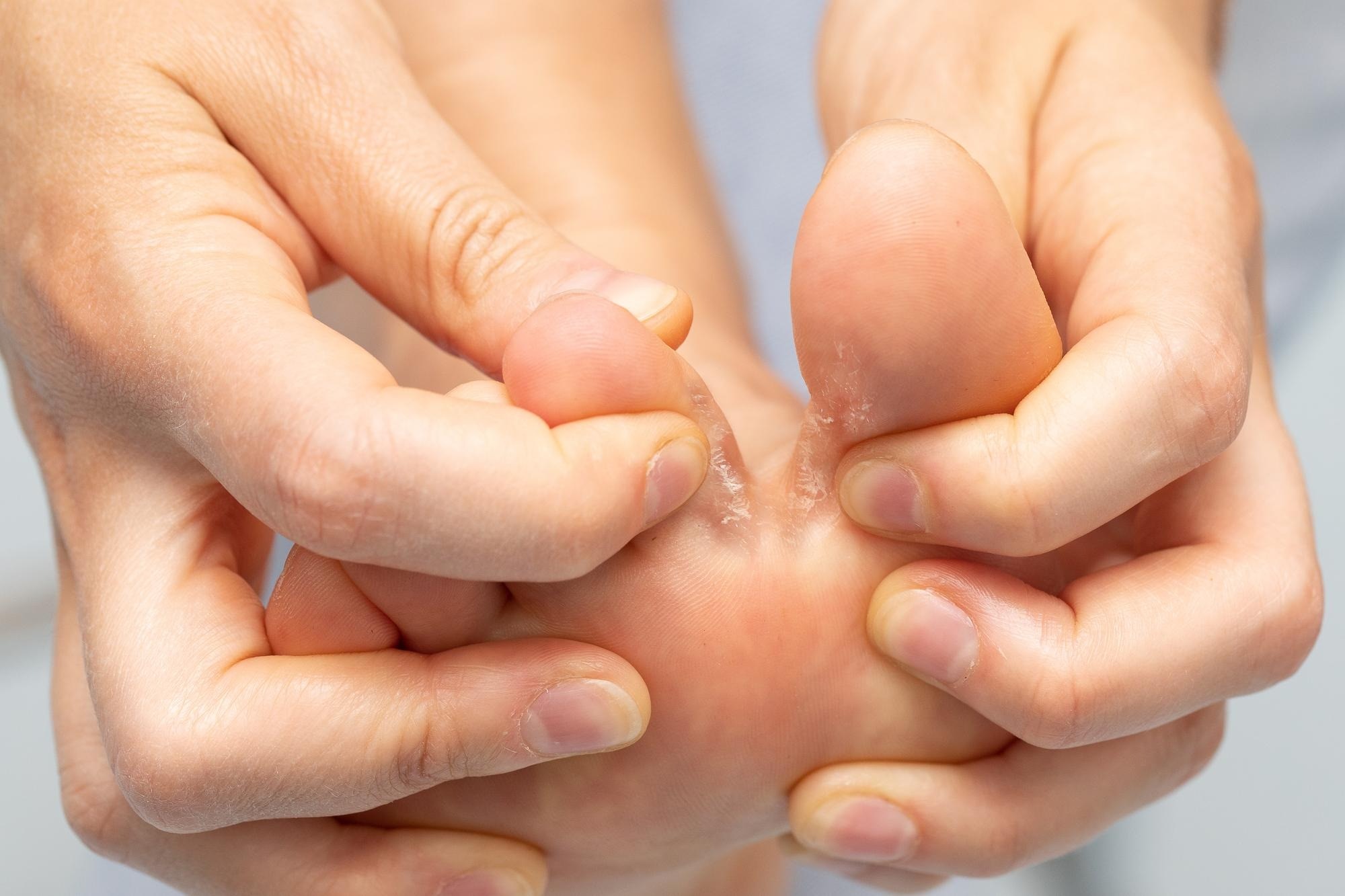
Persistent itch alone does not identify a fungal skin infection. Look for a pattern: tinea corporis, or ringworm, usually forms an enlarging ring with a scaly raised border and clearer centre; tinea cruris or jock itch affects the groin folds; tinea pedis or athlete’s foot causes scaling, cracking, or soggy skin between the toes.
Other clues include:
- Candidal intertrigo: bright-red, moist rash in skin folds, sometimes with small nearby “satellite” spots.
- Pityriasis versicolor: lighter or darker, finely scaling patches on the chest, back, neck, or upper arms caused by Malassezia yeast, not ringworm.
| Condition | Clues that support it | Difference from fungal rash |
|---|---|---|
| Tinea corporis or ringworm | Expanding ring, scaly edge, clearer centre | Border tends to advance outward |
| Tinea cruris or jock itch | Itchy, scaly groin-fold rash | Usually spares the scrotum |
| Tinea pedis or athlete’s foot | Scale, cracks, or whitening between toes | Interdigital pattern is characteristic |
| Candidal intertrigo | Moist, vivid redness in folds with satellite spots | More macerated than a dry ring |
| Eczema or contact dermatitis | Diffuse itch, blisters, or cracking after exposure | No advancing ring; contact dermatitis follows an irritant or allergen |
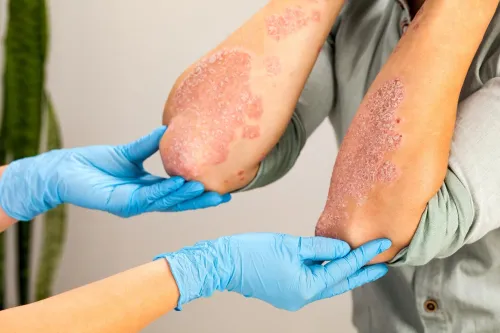
| Psoriasis | Thick, sharply bordered plaques | Scale is often broader and more uniform |
| Bacterial infection | Warmth, tenderness, pus, crusting, or fever | Pain and rapid spread are stronger clues |
| Scabies or allergic rash | Widespread itch, burrows, or hives | Distribution and exposure history matter |
A rash that fails appropriate treatment needs reassessment; repeated antifungal use can delay care for eczema, psoriasis, scabies, or infection.
How a dermatologist confirms fungus before treatment
Recurrent, widespread, unusual, or treatment-resistant lesions deserve confirmation because repeated antifungal courses can miss eczema, psoriasis, bacterial infection, or a resistant fungus. Testing matters even more before prolonged oral treatment, which requires consideration of liver disease, pregnancy, drug interactions, and monitoring.
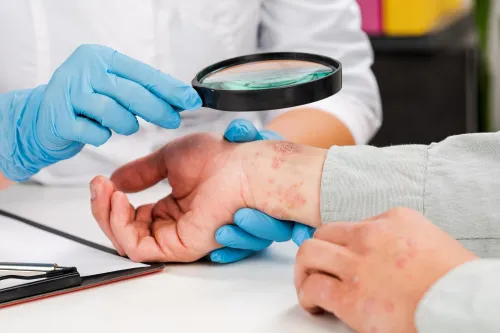
- A dermatologist performs a targeted examination, checking the rash’s border, folds, nails, scalp, and other likely reservoirs. The most active, scaly edge usually provides the best sample.
- During a KOH skin scraping, the clinician gently collects scale and adds potassium hydroxide. KOH microscopy can reveal fungal hyphae or yeast, supporting treatment for a dermatophyte or yeast infection.
- A fungal culture grows the organism from the sample. It takes longer than KOH microscopy but helps identify the fungus when the appearance is atypical, the infection keeps returning, or treatment has failed.
- Molecular testing detects fungal genetic material and can help when microscopy or culture is inconclusive. Ask about testing if lesions followed travel or exposure linked to South Asia, because Trichophyton indotineae can resist terbinafine.
Topical corticosteroids can suppress redness and itch while dermatophytes continue spreading. This altered infection, called tinea incognito, often has less scale and a misleading border.
Treat combination creams containing an antifungal and potent corticosteroid with caution; a clinician may direct brief steroid use for severe inflammation, but it must not replace antifungal treatment or continue indefinitely.
Choosing and applying a topical antifungal correctly
Choose the medicine according to the organism and body site, not itch severity alone. Topical terbinafine is an allylamine commonly used for dermatophytes such as ringworm, jock itch, and athlete’s foot. Clotrimazole and miconazole are azoles that cover dermatophytes and many yeasts; ketoconazole is an azole used for selected dermatophyte or Malassezia infections.
Ciclopirox, a hydroxypyridone, is another option when prescribed.
| Option | Common uses | Practical body-area consideration |
|---|---|---|
| Topical terbinafine | Dermatophyte infections | Useful on smooth skin, groin, and feet; follow that product’s duration |
| Clotrimazole or miconazole | Dermatophytes and Candida yeast | Consider folds and groin; moisture control remains essential |
| Ketoconazole | Selected yeast or dermatophyte infections | Often chosen for particular organisms or sites after assessment |
| Ciclopirox | Dermatophytes and some yeasts | Use the prescribed formulation and schedule |
Apply treatment correctly:
- Wash the area, then dry it completely, especially between the toes and inside folds.
- Spread a thin layer over the visible rash and the surrounding margin as the label or clinician directs.
- Wash your hands afterward, unless your hands are the treated area.
- Continue the full prescribed or labelled course, even after itching improves.
Treating only the centre of a ring leaves the advancing edge behind. Stopping early encourages persistence, while an antifungal-potent steroid combination can mask spread and cause recurrence without review. Cream cannot reach infection adequately inside scalp hair or nails; those sites need clinical assessment rather than repeated topical use.
When oral treatment or specialist testing becomes necessary
Topical treatment is not enough for extensive infection, nail infection, marked inflammation, or a rash that has failed an appropriate course applied correctly. Clinicians may then prescribe oral antifungal treatment such as terbinafine tablets or itraconazole, but testing helps confirm the organism before a prolonged course.
- Check the site and severity. Tinea capitis usually needs systemic treatment because cream does not penetrate the hair shaft. Delaying treatment can spread infection to household contacts and increase the risk of inflammatory hair loss or scarring.
- Look for a reservoir when infection keeps returning. An infected nail, untreated household contact, or another confirmed fungal site can reseed the skin.
- Review safety before prescribing. Tell the clinician about liver disease, pregnancy or plans for pregnancy, every medicine and supplement you take, and any previous drug reaction. Terbinafine and itraconazole have important drug interactions; liver blood tests may be needed before or during treatment.
- Test instead of repeating self-treatment when infection persists after travel or exposure linked to South Asia. Terbinafine-resistant Trichophyton indotineae can cause widespread or recurrent disease and requires specialist advice and laboratory testing.
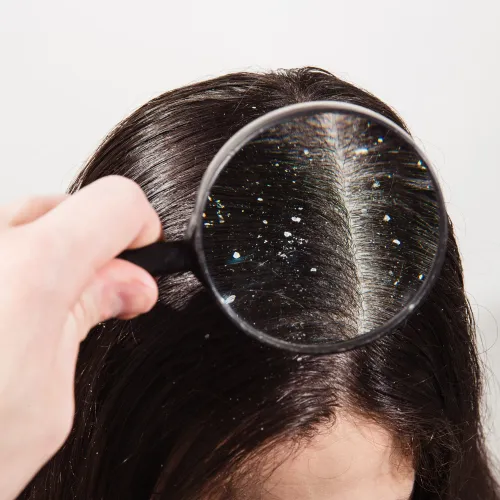
Pityriasis versicolor is different: Malassezia yeast causes it, not the dermatophytes responsible for ringworm. Light or dark patches can remain for weeks or months after clearance; frequent recurrences may need clinician-directed preventive antifungal shampoo or another intermittent regimen. A persistent colour change alone does not prove treatment failure.
Why fungal infections return and when to seek assessment
Incomplete treatment is a common cause of recurring skin infections. Reinfection from towels, footwear, damp socks, untreated household contacts, or infected nails can produce the same rash again. Sweating and friction in folds, diabetes, steroid exposure, or an incorrect original diagnosis also belong on your recurrence checklist.
- Check whether you stopped treatment when the itch improved, rather than completing the prescribed or labelled course.
- Dry carefully between the toes, change socks and underwear regularly, and clean or replace footwear that stays damp.
- Keep groin, abdominal, breast, and other skin folds dry; reduce friction and change out of sweaty clothing promptly.
- Ask about household contacts, examine nails and feet as possible reservoirs, and treat confirmed fungal sites together.
- Reconsider the diagnosis if treatment failed, especially after travel or exposure linked to South Asia, because resistant Trichophyton indotineae can resemble ordinary tinea.
Persistent itching after an appropriate course calls for reassessment, not indefinite antifungal use. Eczema, dermatitis, psoriasis, scabies, and bacterial infection can look similar, while pityriasis versicolor can leave colour changes after clearance.
Seek prompt medical review for a rapidly spreading rash, pus, fever, severe pain, facial or eye involvement, significant swelling, diabetes, immunosuppression, pregnancy, or possible scalp infection. Welcome to Advanced Skin & Hair Laser can arrange targeted examination for an uncertain or recurrent rash.
Laser treatment for fungal infection is not first-line; delay cosmetic procedures over active infection until clinician clearance.
Frequently asked questions
Which recurring rashes are actually fungal infections?
Ringworm often forms an enlarging ring with a scaly raised border and clearer centre. Jock itch affects the groin folds, while athlete’s foot causes scaling, cracking, or soggy skin between the toes. Itching alone does not confirm fungus.
How does a dermatologist confirm a fungal skin infection?
A dermatologist examines the rash pattern and can test skin scale with a potassium hydroxide preparation. Testing helps distinguish fungus from eczema, psoriasis, bacterial infection, or steroid-modified rashes.
How should you apply a topical antifungal?
Clean and dry the area, apply the medicine to the rash and surrounding skin as directed, and finish the full course. Do not use a steroid cream alone on an undiagnosed rash.
When is oral antifungal treatment necessary?
A dermatologist may consider oral treatment when the infection covers a large area, affects hair or nails, keeps returning, or fails to improve with correctly applied topical medicine. Liver history and medicine interactions need review first.
Why do fungal infections return?
Recurrence can follow incomplete treatment, reinfection from damp footwear, towels, household contacts, pets, or an untreated body site. Persistent or repeated infections need assessment to confirm the diagnosis and identify the source.