Laser hair reduction works by heating pigmented hair structures without treating every follicle at the same time, so the realistic goal is sustained reduction rather than guaranteed removal of every hair. You will be able to judge whether the treatment suits your hair and skin, estimate the commitment, and identify the safety questions to ask before booking.
Key takeaways
- Laser heat damages growth structures inside pigmented hair follicles.
- Several sessions target hairs during their active growth phase.
- Wavelength choice depends on your skin tone, hair colour, and treatment area.
- Judge results by reduced density, slower regrowth, and planned maintenance.
What happens inside the follicle when laser energy is applied?
A laser pulse targets pigment, not the entire skin surface. Through selective photothermolysis, melanin in the hair shaft and follicle absorbs a chosen wavelength, converts that light into heat, and carries the heat toward the hair follicle matrix and other growth structures. The resulting thermal injury weakens the follicle’s ability to produce a strong hair.
Cooling and the lower pigment concentration in surrounding skin limit collateral heating, although they do not remove risk.
Energy works best when a follicle is in anagen, the active growth phase, because its pigmented shaft remains closely connected to the matrix. Other follicles are resting or shedding at that moment, so one pulse cannot affect every follicle. This is why results require a treatment series rather than one attempt at total removal.
The FDA definition supplies the permanent hair reduction meaning: a long-term, stable decrease in the number of hairs that regrow after a treatment regimen. It does not mean destruction of every follicle or a guarantee that new hair can never appear. Judge improvement by:
- Slower growth and longer gaps between shaving
- Fewer hairs growing back
- Finer or lighter regrowth
- Less shaving or waxing overall
Perfectly bare skin is not the required endpoint. Some remaining hairs become too fine or lightly pigmented for laser to target effectively and may need another method, such as electrolysis.
Why do you need several sessions instead of one?
One session reaches only a fraction of the follicles. Laser energy works best during the anagen phase, the active part of the hair-growth cycle, when a pigmented shaft is closely connected to the follicle’s matrix. Follicles enter anagen at different times, so a single visit cannot expose the entire population during its most treatable stage.
Use these points to plan your laser hair reduction sessions:
- Keep session spacing at several weeks, allowing treated hairs to shed and another group to enter anagen.
- Adjust the interval for the body area and visible regrowth; faster-growing areas may need earlier review than slower-growing areas.
- Allow minutes for a small area and close to an hour for larger areas, depending on the site and equipment.
- Judge timing by returning growth, not by treating repeatedly before new hairs become visible.
There is no universal session count for the initial course. Body site, hair thickness and colour, skin type, device, treatment settings, and hormonal influences all change the response. A successful course can mean fewer hairs, slower growth, finer regrowth, and less shaving rather than completely bare skin.
Maintenance sessions can become necessary after the initial course. A treated follicle may recover, while hormonal signals can produce new hairs that later become susceptible to treatment; facial areas especially need longer-term planning.
Which laser is appropriate for your skin tone and hair colour?
An alexandrite laser 755 nm is often chosen for lighter, untanned skin with dark hair; a diode laser 808 nm offers a commonly used middle option; and an Nd:YAG laser 1064 nm is frequently considered for deeper skin tones. The right choice depends on pigment contrast, skin exposure, and device settings—not the label alone.
| Platform | Wavelength | Common consideration |
|---|---|---|
| Alexandrite | About 755 nm | Strong melanin absorption; often suited to lighter skin with dark, coarse hair |
| Diode | About 800–810 nm | Intermediate penetration and absorption; selection depends on skin and hair contrast |
| Nd:YAG | About 1064 nm | Deeper penetration and greater epidermal sparing; commonly considered for darker skin |
Dark, coarse hair provides a strong melanin target, so it usually responds best. White, grey, very light blonde, red, and very fine hair may contain too little usable pigment for reliable treatment.
Darker skin is not automatically disqualified, but epidermal melanin also absorbs laser energy and narrows the safety margin. Recent tanning or self-tanner increases that concern; a provider may choose conservative fluence, effective cooling, and a test spot to reduce burns and post-inflammatory colour change.
IPL versus laser hair reduction is not an interchangeable comparison. IPL emits a broad band of non-coherent light, while each laser uses a defined wavelength, so IPL results do not prove that every laser will perform the same way. Use wavelength-matched eye protection and avoid treating suspicious pigmented lesions until they have been assessed.
What should happen during a safe treatment session?
1. A laser hair reduction consultation should begin with your medical and tanning history. Tell the provider about recent sun exposure or self-tanner, medicines that increase light sensitivity, prior pigment changes, and conditions affecting hair growth. Significant tanning can narrow the safety margin and lead to postponement.
2. The provider should inspect your skin and hair, including colour, thickness, density, and treatment area. Suspicious pigmented lesions need appropriate assessment; do not allow laser treatment directly over an unexplained mole or changing spot. Ask how the device wavelength and settings will suit your skin tone and hair.
3. A test patch is useful when skin type, tanning history, or treatment risk calls for extra caution. The area should be prepared by shaving, not waxing or plucking, because the follicle needs to retain its target.
Welcome to Advanced Skin & Hair Laser can use the consultation to explain how test spots, device choice, cooling, and settings will be individualized for your skin.
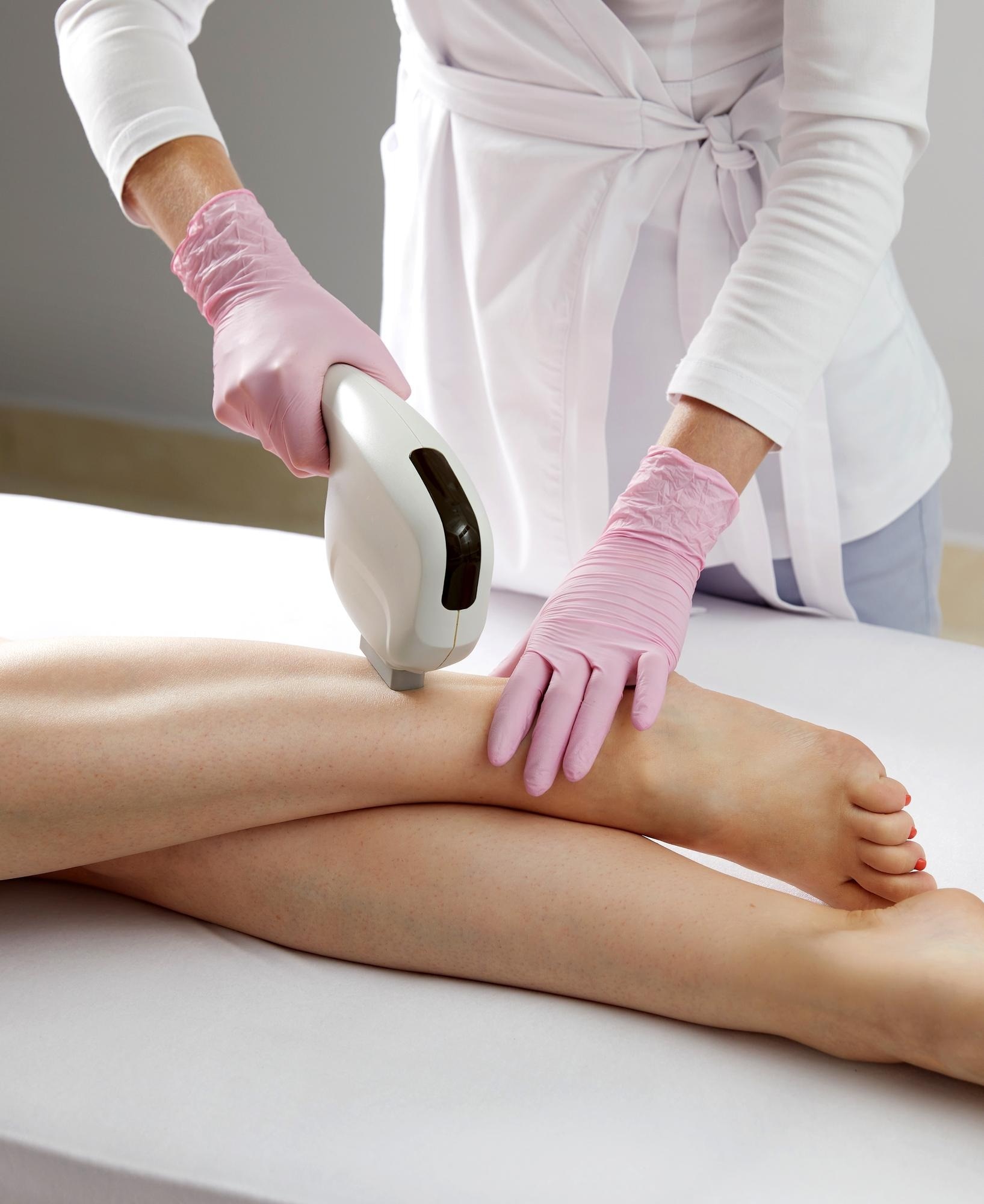
4. During treatment, you should wear laser eye protection matched to the device wavelength. Cooling protects the surface while the operator delivers individual pulses; each pulse can feel like a quick snap, sting, or burst of heat. Temporary perifollicular redness and swelling around treated hairs is expected and can resemble mild sunburn.
Discuss burns, blistering, crusting, scarring, and lasting pigment changes before treatment. Also ask about paradoxical hypertrichosis, especially on the face or neck and after low fluence; new or increased hair can require a different strategy rather than repeated identical settings.
Related service
Laser Hair Reduction Laser hair reduction is a safe and effective way to reduce unwanted hair permanently. View service → |
How do you judge long-term results, maintenance, and facial hair response?
A durable result varies with body site, hair thickness and pigment, skin type, device, and fluence. Judge the course by reduced density, slower regrowth, finer hairs, and fewer shaving or waxing sessions—not by total disappearance.
Use this checklist after the initial course:
- Schedule laser hair reduction maintenance when regrowth becomes noticeable or previously treated follicles recover.
- Track facial hair laser treatment separately from body areas; the face is less predictable because androgen-sensitive follicles can remain active.
- Seek medical evaluation for hirsutism and PCOS, irregular periods, sudden growth, or other signs of hormonal imbalance. Hormonal signals can create new terminal hairs despite successful treatment.
- Reassess the plan if growth persists, spreads, or increases. Paradoxical hypertrichosis, particularly on the face or neck, can require a different strategy rather than identical settings repeated.
The endpoint is often a smaller population of finer hairs, not bare skin. Once remaining hairs become too fine or lightly pigmented for reliable laser absorption, electrolysis for light hair or another method may work better.
Body areas with stable, coarse, dark hair usually offer more predictable maintenance needs than hormonally responsive facial areas, but no body site is permanently insulated from new growth.
Frequently asked questions
What happens inside the follicle when laser energy is applied?
Melanin in the hair absorbs the selected wavelength and converts it into heat. That heat travels toward the follicle matrix and other growth structures, weakening the follicle’s ability to produce a strong hair.
Why are several laser hair reduction sessions needed?
Laser works best when a hair is in its active growth phase. Because follicles enter this phase at different times, several sessions are needed to treat more of them.
Which laser is suitable for my skin tone and hair colour?
The suitable wavelength depends on your skin tone, hair colour, hair thickness, and treatment area. Dark hair provides more melanin for the laser to target, while white, grey, and very light hair respond poorly because they contain little pigment.
What should happen during a safe laser hair reduction session?
A clinician should assess your skin and hair, select appropriate settings, protect your eyes, test the treatment area when needed, and monitor your skin response. You should receive aftercare instructions and warnings about heat, sun exposure, and unusual reactions.
How should you judge long-term laser hair reduction results?
Track reduced hair density, slower regrowth, finer remaining hairs, and the time between shaving or other hair-removal methods. Facial hair often needs maintenance, and hormonal changes can stimulate new growth.